Current scam alerts
From CERT-In and CBI. Share the cards on WhatsApp: each carries its source and the 1930 helpline.
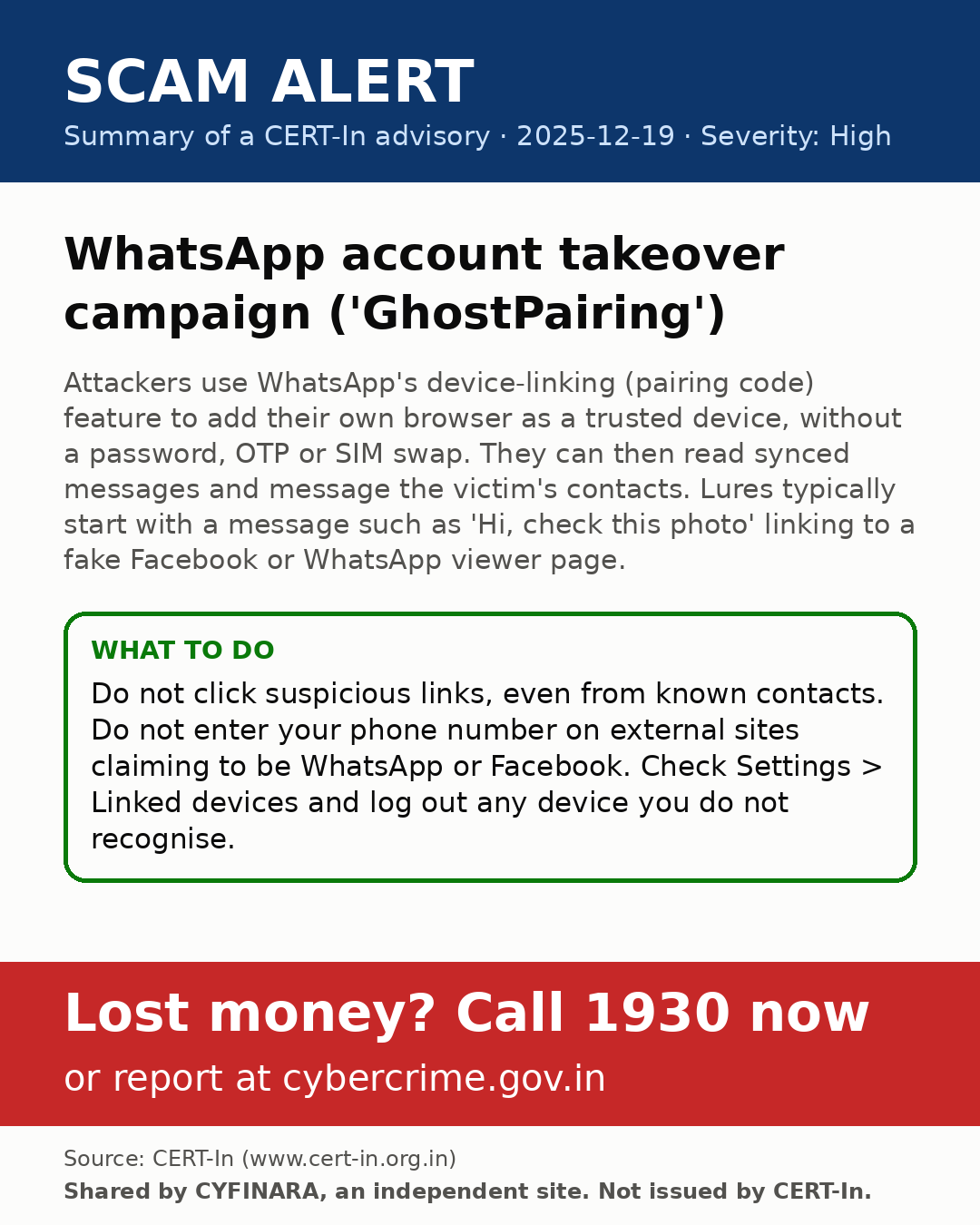
WhatsApp account takeover campaign ('GhostPairing')
Attackers use WhatsApp's device-linking (pairing code) feature to add their own browser as a trusted device, without a password, OTP or SIM swap. They can then read synced messages and message the victim's contacts. Lures typically start with a message such as 'Hi, check this photo' linking to a fake Facebook or WhatsApp viewer page.
CERT-In advisory as reported by Business Standard; the Linked devices check is from the same coverage · Source: CERT-In
Download card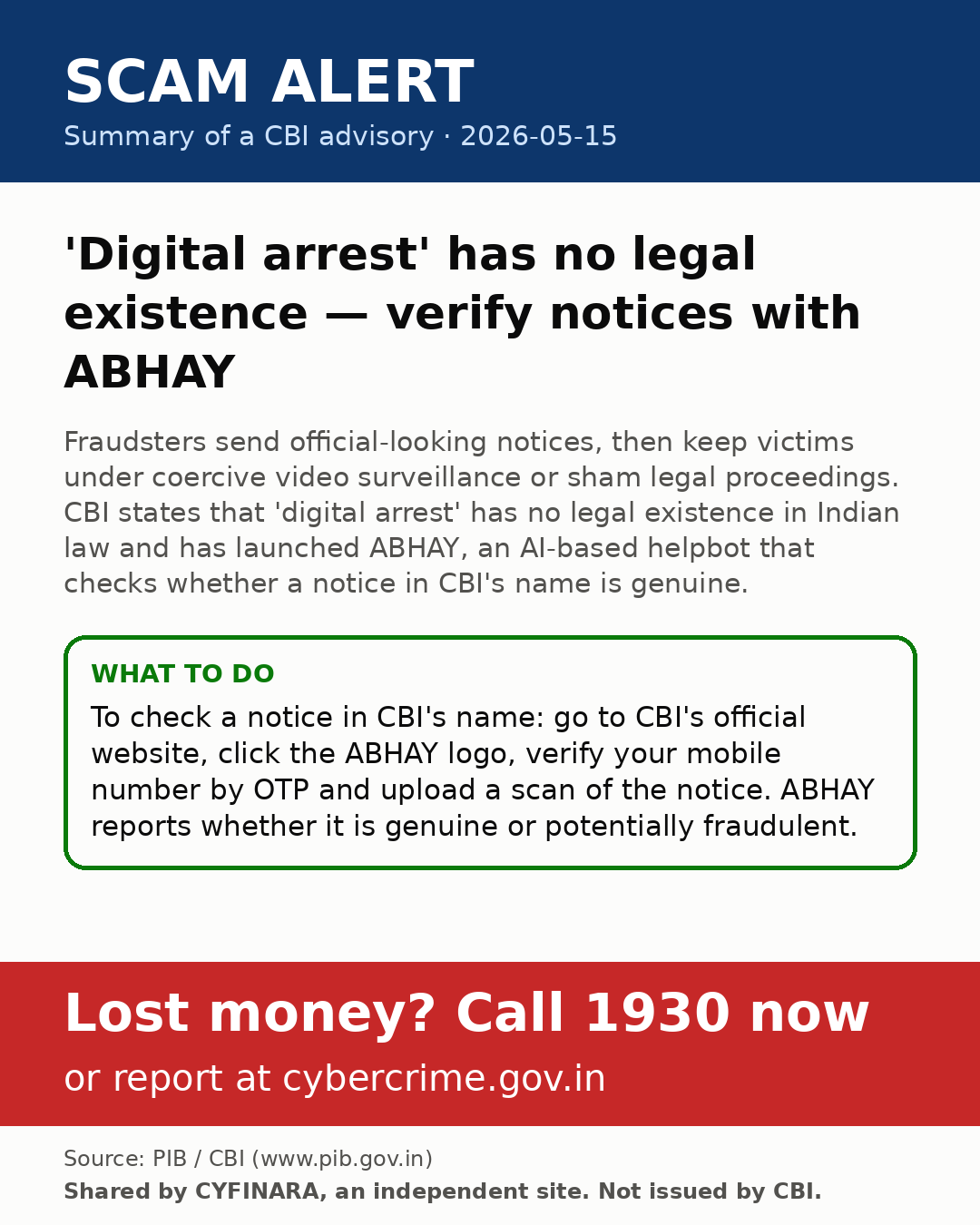
'Digital arrest' has no legal existence — verify notices with ABHAY
Fraudsters send official-looking notices, then keep victims under coercive video surveillance or sham legal proceedings. CBI states that 'digital arrest' has no legal existence in Indian law and has launched ABHAY, an AI-based helpbot that checks whether a notice in CBI's name is genuine.
CBI procedure as reported in coverage of the PIB release · Source: PIB / CBI
Download card